



Growing startups often reach a point at which fundraising is either necessary to continue the growth of the business, or appealing for other reasons. If you are considering taking on investment funds for your startup, there are several basic considerations you should keep in mind. This post covers two aspects that may often be overlooked by founders, causing potentially significant issues for your business and fundraising in later stages.
...Read More

You're thinking of starting a business. You might have researched the requirements for legally forming a business in your state, which usually means filing certain documents with the secretary of state. Is this all you need to do? Are there any additional documents or agreements you should have in place? While your state may not require additional documents be filed, many companies will want to create additional internal documents governing the company, perhaps for the reasons described in this post.
Common formation documents include bylaws or an operating agreement, depending on the type of entity you filed; resolutions confirming your officers and/or board members, and setting forth the ownership of your company, if there are multiple owners or members; and certain agreements for founders, depending on your business, which may include intellectual property transfer agreements, or vesting agreements for the founders' equity.
...Read More

At Gutwein Law, we understand navigating tax credits can be difficult. So, we've put together a list of tax credits for Midwestern states to help you get started. Ready for today's blog post? Good! Make some noise for Illinois!
...Read More%20and%20begin%20going%20about%20their%20business.%20Then,%20they%20run%20into%20trouble%20down%20the%20road.%20Infringements,%20misappropriation,%20ownership%20disputes,%20and%20ultimately%20lawsuits%20are%20enough%20to%20stop%20any%20startup%20in%20its%20tracks.%20That's%20why%20registering%20IP%20with%20the%20appropriate%20governmental%20organizations%20is%20totally%20worth%20it.%20We'd%20even%20go%20as%20far%20as%20saying%20it's%20one%20of%20the%20first%20things%20you%20should%20do%20when%20starting%20a%20company%20(after%20forming%20the%20entity%20and%20determining%20ownership,%20of%20course).%20But,%20we%20don't%20want%20to%20make%20it%20sound%20too%20straightforward%20because%20there's%20a%20lot%20to%20consider%20when%20protecting%20your%20IP.%20We%20could%20go%20on%20and%20on,%20but%20that%20wouldn't%20be%20any%20fun.%20So,%20we'll%20just%20hit%20you%20with%20the%20basics.%20The%20stuff%20you%20really%20need%20to%20be%20thinking%20about%20as%20a%20startup%20founder.%20Let's%20get%20down%20to%20it%20then.)

We see it all the time: startup founders ignore the importance of intellectual property (IP) and begin going about their business. Then, they run into trouble down the road. Infringements, misappropriation, ownership disputes, and ultimately lawsuits are enough to stop any startup in its tracks.
That's why registering IP with the appropriate governmental organizations is totally worth it. We'd even go as far as saying it's one of the first things you should do when starting a company (after forming the entity and determining ownership, of course). But, we don't want to make it sound too straightforward because there's a lot to consider when protecting your IP. We could go on and on, but that wouldn't be any fun. So, we'll just hit you with the basics. The stuff you really need to be thinking about as a startup founder.
Let's get down to it then.
...Read More
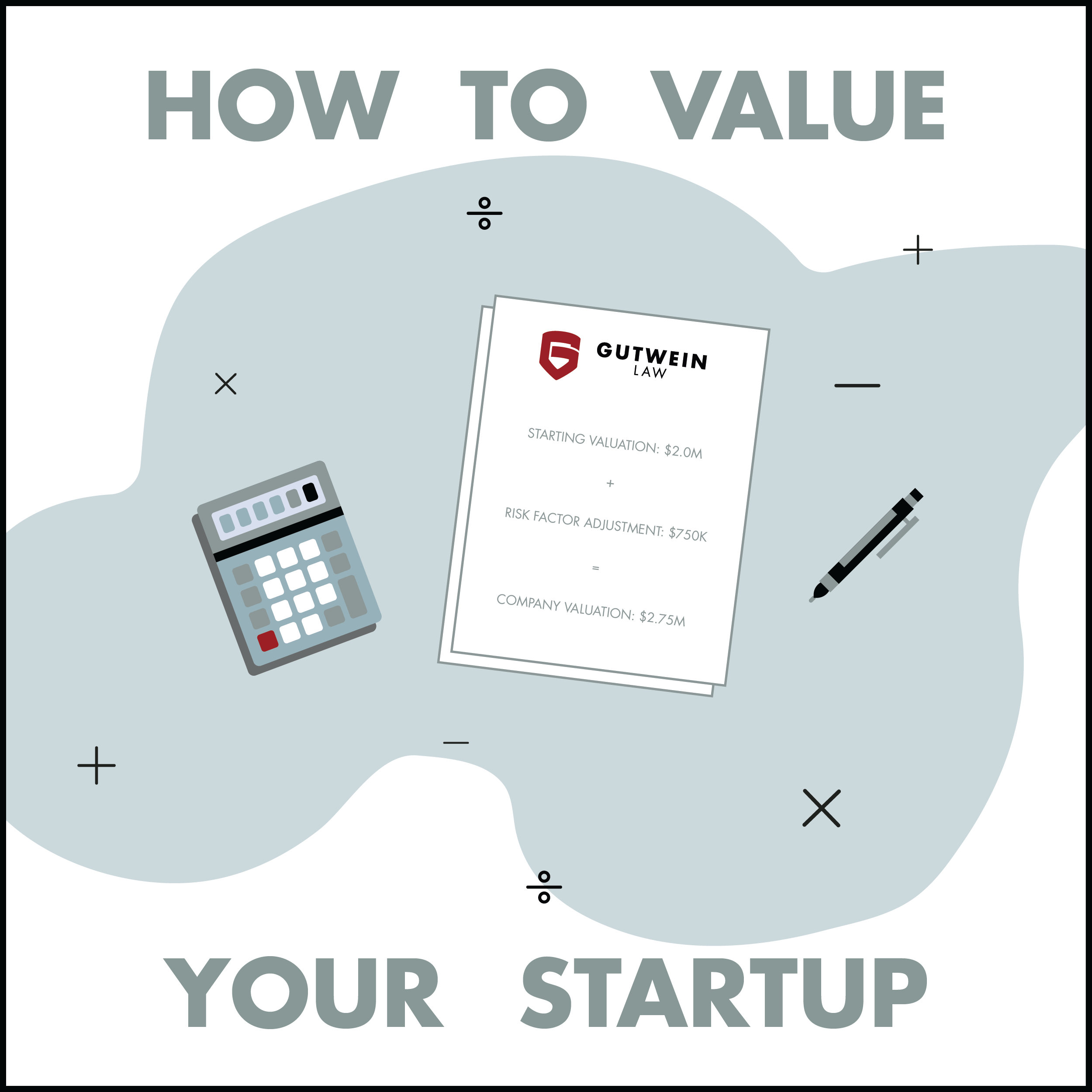
Assigning a value to your company is a serious "must-do" for any startup, especially if you're on the hunt for investors. But determining your company's valuation isn’t as straightforward as looking at your bottom line (probably a good thing if you're pre-revenue). It's a blend of science and some art, and there are dozens of valuation methodologies to consider. A quick tip: don't limit yourself to one approach. There's no such thing as the perfect method for your company and utilizing multiple methods allows for an average to be taken, which can help in the negotiation process with investors.
With that in mind, where should you start? Well, there are four valuation methods we think standout among the rest. These should give you exactly what you need the next time you step into the shark tank:
...Read More